
Searching for a Chattahoochee County Warrant
The Chattahoochee County Sheriff's Office is the first public contact, but it does not publish a live warrant search. Call (706) 989-3644 and ask whether staff can confirm a current county warrant, whether the office holds it or only serves it, and what process applies to a planned surrender. Have the full legal name and date of birth ready. For your own matter, add any citation number, case number, court date, or papers you received.
A full check follows the event that caused the concern. A missed criminal setting may belong with the Superior Court clerk. A warrant application may route through Magistrate Court, while a misdemeanor traffic failure to appear usually belongs with Probate Court. Georgia's official guidance warns that an in-person inquiry can lead to immediate custody. Calling first and consulting counsel can help you learn where to report and whether the court offers a reset, bond, or recall process.
- Call the sheriff with the full name and birth date, and ask what can be confirmed before any visit.
- Call the likely issuing court: Magistrate at (706) 989-3643, Probate traffic at (706) 989-3603, or the Superior Court clerk at (706) 989-3424.
- Use the clerk's case link only to look for case context. It is not documented as a warrant portal.
- Submit a narrow sheriff open-records request if staff requires a written request for releasable service information.
- For traffic FTA consequences, check DDS only after the court identifies the citation. Georgia offers no public statewide warrant lookup.
Chattahoochee's Phone-First Warrant Search
The county's missing search box is a meaningful fact. The sheriff site has contacts, forms, an FAQ, and an anonymous reporting form, but no warrant-search fields, filters, list, pagination, or update date. The state directs the public back to the county sheriff rather than into GCIC, which is reserved for criminal-justice agencies.
Ask a focused set of questions: Is the warrant current? Which court issued it? Does the sheriff hold it for service? What status appears now? Which office can change that status? Staff may set limits on what can be disclosed by phone. The safe wording is “call and ask,” since no official source promises that the sheriff will always confirm a warrant over the phone.
Note: A blank web search cannot clear a Chattahoochee County warrant because no public county warrant list exists.
Warrant Search Fields Explained
Chattahoochee County publishes fields for a records request, not a live name search. Use “Other” to request releasable warrant or service information and describe the record narrowly. A case number and date range help the custodian locate an existing record without asking the office to create a new statewide report.
| Field Label | Type | Required | Notes |
|---|---|---|---|
| Your Name | Text | Yes | Identifies the requester, not the warrant subject. |
| Your Email and Phone | Text | Yes | Provides response and callback channels. |
| Requested Documents | Checkboxes | No item marked | Choose “Other” for a precise warrant-status request. |
| Case Number(s) | Text | Not stated | Use a known court or incident identifier. |
| Additional Information | Text area | Not stated | Name the court, date range, and releasable service status sought. |
Chattahoochee Open Records Route
The official form gives a documented path when a phone call cannot supply releasable records. It says staff will respond within three business days with an estimated time and cost. Research fees may apply under O.C.G.A. § 50-18-71, copies cost $0.10 per page, and a disc or tape costs $1.00. Those terms concern record production, not payment for a direct warrant check.
The consolidated courthouse page shows how the local offices share a small civic center. The image below helps distinguish that court route from the sheriff's separate service record.
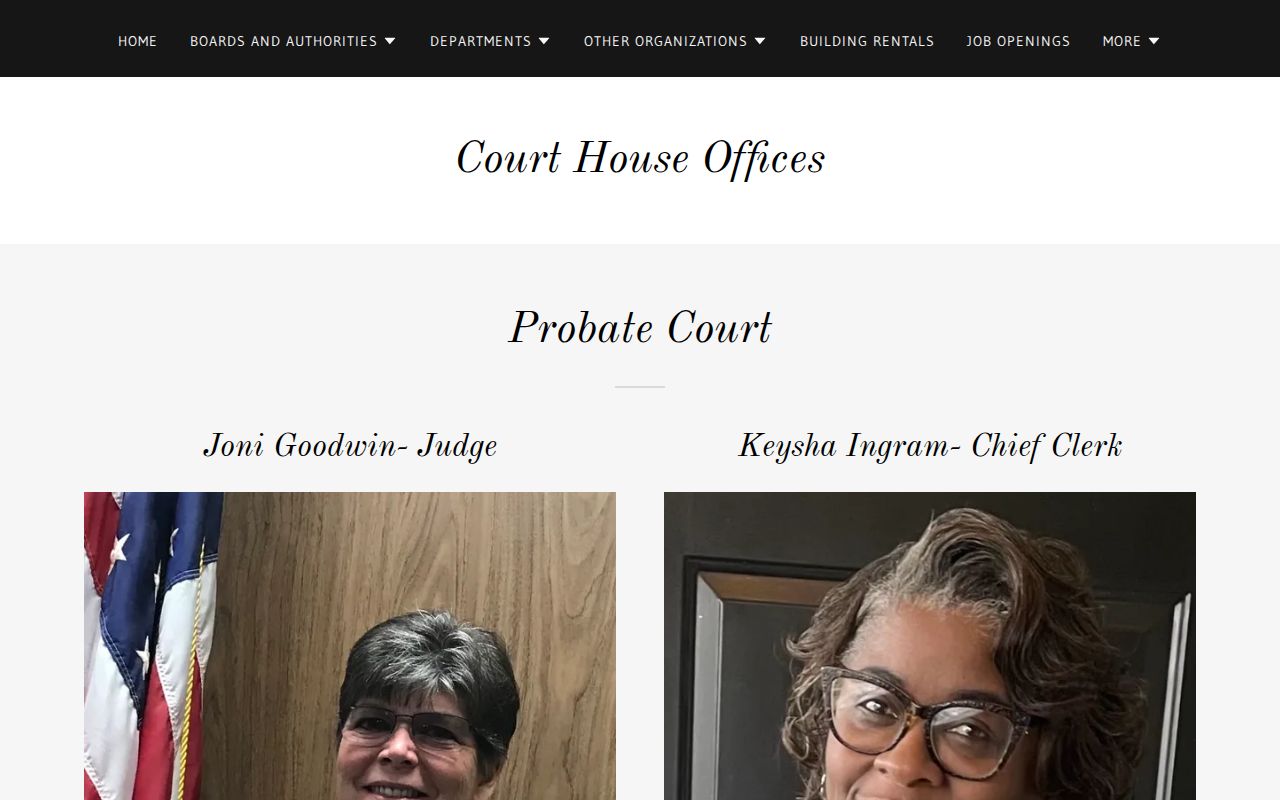
Send a sheriff request for sheriff-held service or incident material. Send a court-record question to the court or clerk that owns the case.
The sheriff's anonymous form is shown below because it is easy to confuse with a lookup tool.
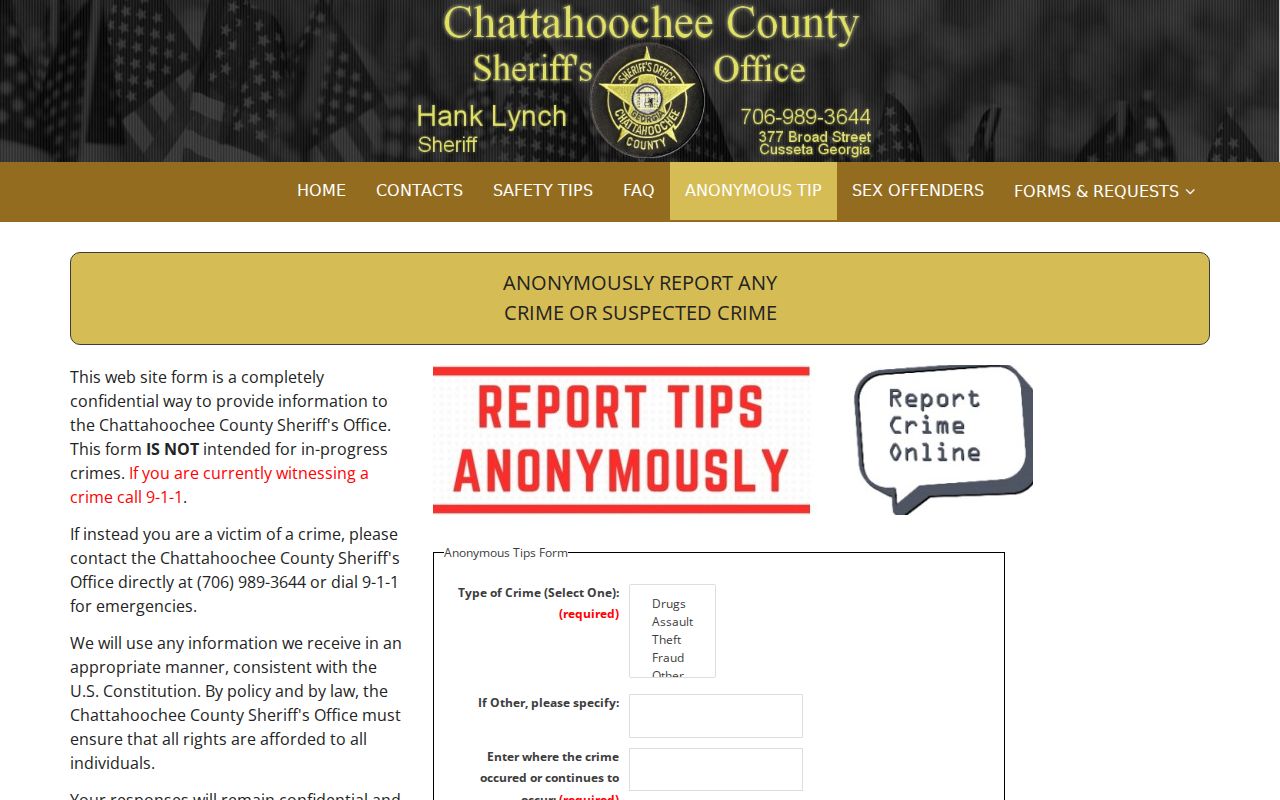
That form reports information about possible crime. It does not confirm a warrant, and it is not for an emergency in progress.
Prepare a Chattahoochee Warrant Inquiry
Identity details reduce false matches. Georgia's public guidance calls for first name, last name, and birth date. A citation, case number, court notice, or prior court date can point to the right custodian. Do not rely on a common name alone.
Have ready: Full legal name, date of birth, case or citation number, the missed date, and the court named on the paperwork.
The sheriff's separate local criminal-history form is not a substitute. It requires photo identification and a fee, is limited to local history, and does not promise live warrant status. Georgia Felon Search likewise reports felony convictions, not current warrants.
What a Warrant Search Shows
There is no standard local result screen. A sheriff or court response may identify the order, the case behind it, the issuing court, and service status. Ask which office entered the status and which office can change it. Exact public fields vary with the record and access rules.
| Warrant Number | Local format not published; request the actual identifier rather than assuming a pattern such as LOCAL FORMAT NOT PUBLISHED. |
|---|---|
| Charge or Reason | The alleged offense, missed appearance, or other event tied to the order. |
| Issuing Court | The court that controls recall, quash, bond, or the next setting. |
| Bond | Amount and type, if releasable; confirm current terms with the court or sheriff. |
| Status | Active, served, returned, recalled, quashed, or cleared as recorded by the custodian. |
Chattahoochee Clerk Login Limits
The clerk's case-search link reached a login or redirect endpoint during research. No open field labels were exposed. Even if access becomes available, a case docket and a warrant-service record can answer different questions. A court calendar may show a criminal setting without proving an active warrant exists.
Use the clerk route for Superior, Juvenile, and Magistrate case events, then confirm service with the sheriff. Juvenile material is generally closed. For a Probate traffic case, contact that court directly. This split prevents a docket entry from being mistaken for a current law-enforcement status.
Where to Check Warrants in Chattahoochee County
The sheriff is the countywide service and custody contact. The Superior Court of the Chattahoochee Judicial Circuit controls serious criminal case records through its clerk. Magistrate Court handles warrant applications and early criminal proceedings. Probate Court administers local misdemeanor traffic court. No separate Cusseta municipal warrant office was found because city and county government are consolidated.
GCIC gives agencies access to wanted-person data, but it is not a public portal. For a warrant from another county, contact the sheriff and issuing court in that jurisdiction. For traffic FTA, Georgia DDS is a later license-compliance check, not proof of warrant status.
Chattahoochee Warrant Custodians Compared
One office rarely holds the full answer. The court creates and changes the judicial record. The sheriff receives and serves the order. A mismatch can reflect a transfer, return, recall, or entry delay rather than an error.
| Contact | Best question | Limit |
|---|---|---|
| Sheriff | Current service or custody status | No public search or promised phone disclosure |
| Superior clerk | Case event and issuing-court record | Login link is not a warrant database |
| Magistrate Court | Warrant application or preliminary matter | Access can be restricted |
| Probate Court | Misdemeanor traffic case or FTA | DDS status is separate |
The official sheriff contact card supplies the countywide service route.
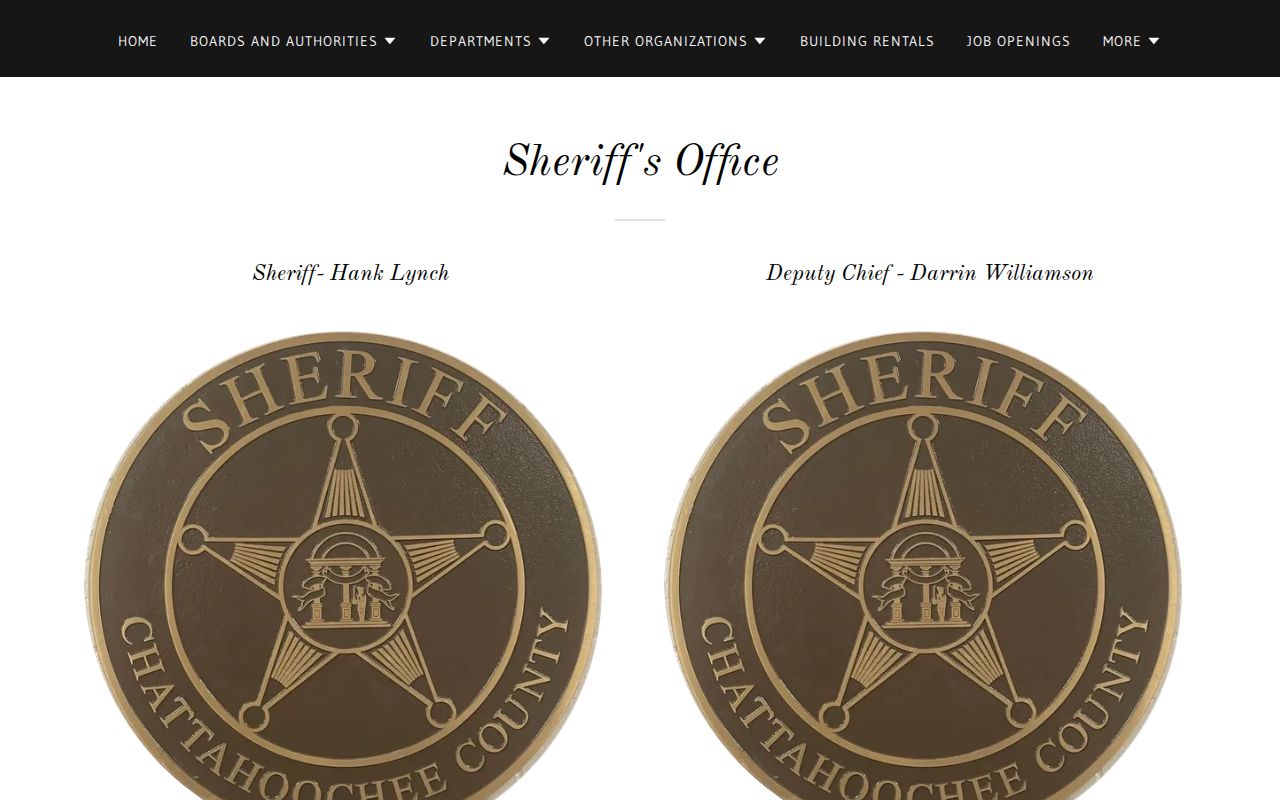
Call during the posted business hours and ask about the current procedure before making an in-person visit.
Chattahoochee Warrant Status Terms
Status words describe different events. They should be confirmed with the office that made the entry, especially when the sheriff and court records do not yet match.
- Active or outstanding
- The custodian shows the warrant as not served, recalled, or cleared.
- Served
- Law enforcement executed the order, but the underlying case continues.
- Recalled
- The issuing court withdrew the warrant.
- Quashed
- The court set aside the warrant or process.
- Cleared
- The warrant is no longer active in that custodian's system; written proof remains useful.
Paying money or posting bond may address custody without disposing of the charge. Ask when the new status will reach both court and law-enforcement systems.
Restricted Warrants and Access Rules
The Georgia Open Records Act generally supports access to agency records, but the request must reach the right custodian. It permits exemptions and redaction for protected law-enforcement, privacy, juvenile, and active-investigation material. Court files follow court access rules, including Uniform Superior Court Rule 21.
Key Rules:
Sealed files and active-investigation material may be withheld or redacted under Georgia law or a court order.
Juvenile files are generally closed unless a statute, transfer, or court order permits access.
Unexecuted search-warrant materials remain confidential until execution or return, so absence is not proof that no warrant exists.