
Chattahoochee County Arrest Warrants Explained
Georgia law lets a superior, state, city, or magistrate judge, or a qualified municipal officer, sign an arrest warrant when probable cause exists. That standard rests on the officer's personal knowledge or sworn facts in a complaint or affidavit. In plain terms, it means a fact-based reason to think an offense happened and that the named person was involved. Chattahoochee County Magistrate Court, through the Unified Government, is the main local route for warrant applications. The judicial officer reads the sworn details, and if the standard is met, signs the order authorizing arrest. A warrant can issue before any indictment. Once the arrest and preliminary steps are done, a felony case may move to the Superior Court of the Chattahoochee Judicial Circuit, where the clerk keeps the file.
Probable Cause in Chattahoochee County
When a private person applies for a warrant in Chattahoochee County, O.C.G.A. § 17-4-40 generally requires a hearing and notice to the accused. Georgia carves out exceptions. Immediate threats, flight risk, obstruction, existing custody, fugitive status, certain deposit-account fraud matters, and family violence all qualify. That is why no public result shows every pending application. The rules changed too. Signed HB 1131 rewrites the notice language effective July 1, 2026, and stresses personal service of a notice naming the specific charge and the key facts. Anyone in Chattahoochee County who receives such a notice should read it closely, keep it safe, and talk with a lawyer rather than assume the application settles anything.
Inside a Chattahoochee County Arrest Warrant
Chattahoochee County publishes no sample warrant for public viewing. Georgia court and citation schemas show which fields may appear, though a released copy can redact identity data, juvenile information, investigative facts, or sealed material.
| Warrant number | Local identifier; the county's format is not published. |
|---|---|
| Named subject | Name and identifying details, with protected fields possibly removed. |
| Charge | Alleged offense, code section, and description. |
| Issuing court | Judge or court that found probable cause. |
| Dates | Issue, arrest, service, or return dates when recorded. |
| Bond | Amount or security type if a judicial officer has set it. |
| Linked file | Agency incident number or court case number. |
Never rely on a guessed number like YYYY-W-#####. Ask the Chattahoochee County office holding the file to read the real identifier and its current status.
Chattahoochee Warrant Records Without Names
A Chattahoochee County warrant record can be described without republishing a private person's data. Georgia's schema separates the issuing court, the alleged charge, the service event, the bond notation, and any transfer or commitment record. Those fields tell you where a question belongs. File questions go to the clerk. Service and custody questions go to the sheriff. The Georgia Crime Information Center serves criminal-justice agencies around the clock, but it is not a public warrant lookup, and its interface describes an agency system rather than any searchable Chattahoochee County roster.
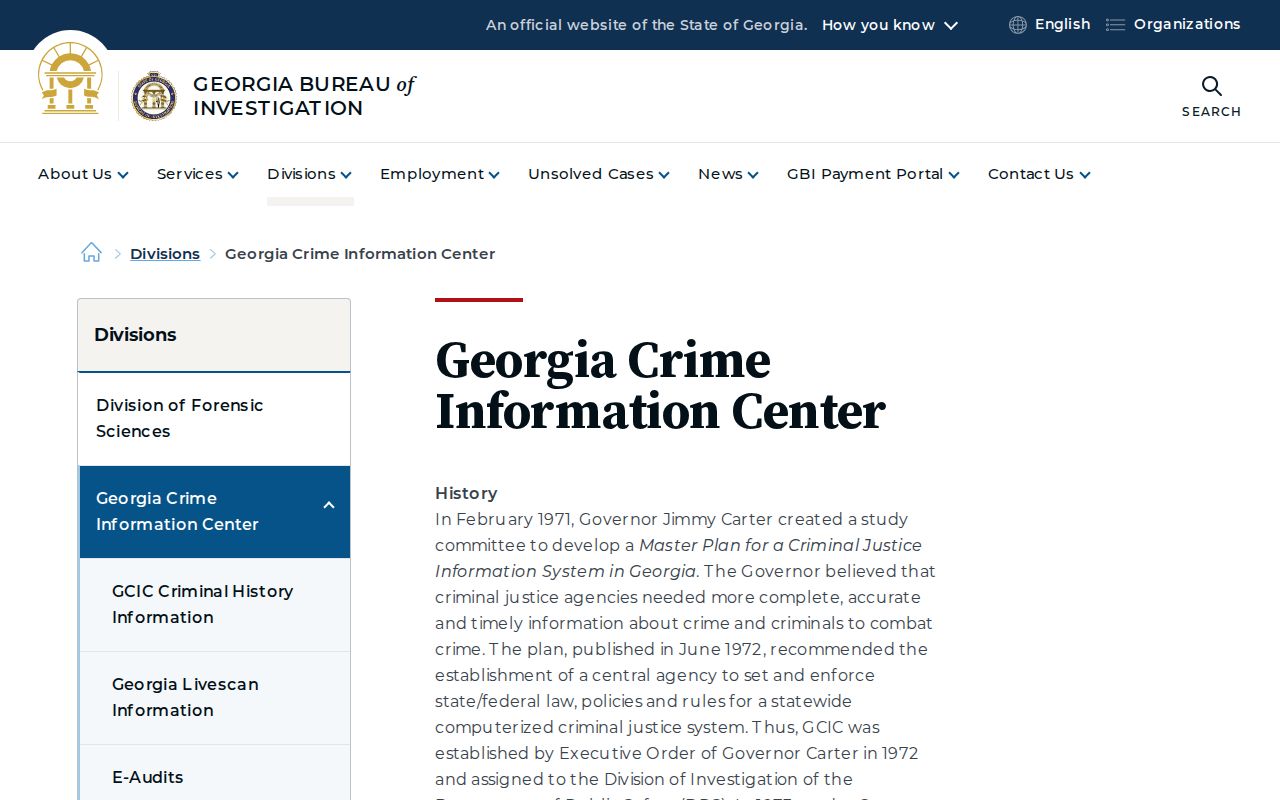
The fallback stays local. Call the Chattahoochee County sheriff and the court, because a blank online result cannot rule out a sealed, recent, or unserved arrest warrant.
Serving Arrest Warrants in Chattahoochee County
The Chattahoochee County Sheriff's Office handles warrant service plus court, correctional, custody, and records questions countywide. It lists no named warrant division or separate warrant line. Call 706-989-3644. The office sits at 377 Broad Street with normal hours of 8:00 a.m. to 4:30 p.m., and after-hours emergencies go to 911. The sheriff or another authorized officer may serve the warrant. After arrest, the person can be booked, brought before a judicial officer, and given a bail decision when allowed. Uniform Magistrate Court Rule 24.2 requires the original warrant to return to Magistrate Court or its designee after arrest, for transfer to the prosecutor. The sheriff records service, but the issuing judge alone controls a recall or quash in Chattahoochee County.
First Appearance After Chattahoochee Arrest
First appearance is an early judicial review, not a trial. Uniform Magistrate Court Rule 25.1 sets it immediately after arrest and no later than 72 hours after an arrest with a warrant, unless bond comes first. At the hearing in Chattahoochee County, the officer states the charges and rights, addresses counsel, explains commitment-hearing rights, and considers bail when authorized.
Quick answer: First appearance starts the post-arrest court process; it neither proves guilt nor disposes of the underlying charge.
The local Magistrate Court sits at 379 Broad Street, reachable at 706-989-3643. A felony case may move to Superior Court, whose clerk shares that address and takes calls at 706-989-3424. Ask the Chattahoochee County sheriff which court holds the file now, since the arresting office does not own every later step.
Comparing Arrest, Summons, and Bench Warrants
Each Chattahoochee County instrument demands something different. An arrest warrant orders custody on probable cause. A summons tells a person to appear, with no arrest command attached. A bench warrant answers a missed court duty in an existing case.
| Feature | Arrest warrant | Summons | Bench warrant |
|---|---|---|---|
| Basis | Probable cause | Charge handled by appearance | Failure to appear or comply |
| Order | Take into custody | Appear on stated date | Apprehend and return to court |
| Response | Counsel, surrender, bond | Attend as ordered | Reset, recall, appearance, bond |
Skip a summons and a bench warrant can follow. The bench warrant search walks through Chattahoochee County's missed-setting route.
Chattahoochee Arrest Warrant Custodians
Chattahoochee County splits warrant duties among a few offices. Magistrate Court takes arrest-warrant applications and first appearances. Superior Court judges control felony and probation-related orders in their own cases, and Clerk Tami Wade's office keeps those files. Probate Court handles misdemeanor traffic matters. Juvenile records go through the clerk too, though they are generally confidential. The doors sit close together, but they are not interchangeable. Court offices are at 379 Broad Street. The sheriff is next door at 377 Broad Street. Call ahead before you go, because an in-person warrant inquiry can turn into an immediate custody event. Put issuance, recall, case setting, and judicial conditions to the court. Put service, booking, surrender, and custody to the sheriff. Cusseta has no separate city warrant office.
If There Is an Arrest Warrant for You
Chattahoochee County publishes no walk-through surrender schedule and no bond portal. Confirm the order by phone first. Then get advice before you show up. A lawyer can pinpoint the issuing file, ask whether recall or modification is legally possible, and set up a planned surrender when the court and sheriff allow it.
- Call the sheriff and likely court with the case or incident number.
- Ask counsel about surrender, recall, quash, first appearance, and bond.
- Confirm the reporting place, time, identification, medication, and intake rules.
- Ask for the exact bond amount and approved security type.
- Keep the release, receipt, court order, and next setting notice.
Important: Speak with a lawyer before an unplanned visit; an active Chattahoochee County arrest warrant can result in immediate custody.
Bond Before or After Chattahoochee Booking
Georgia allows release on recognizance and secured bond. Security can be cash, personal surety, commercial surety, or qualifying property, if the authorized court accepts it. Chattahoochee County posts no warrant bond schedule, no payment methods, and no bond-window hours. Never assume an amount. Never assume a bond type will be accepted. Ask the court or sheriff for the warrant number, the exact amount, the approved bond, who may tender it, and where it is received. Ask whether first appearance is still required and which new date controls. Bond secures release; it does not dismiss the allegation, recall every warrant automatically, or end the case. Keep your proof. Then confirm that sheriff and clerk records match. For releasable sheriff records, the open-records form is a fallback, though it cannot override sealing or change a status. A live arrest-warrant question needs a prompt phone call, not a slow records request.